
NCLEX-RN guideExam Format
NCLEX Stopped at 85 Questions: What It Actually Means
An 85-question NCLEX can end in a pass or a fail. Here is what the minimum-length stop means, how CAT decides, and what to do while you wait.
Short answer
If your NCLEX-RN ended normally at 85 questions, the number alone does not tell you whether you passed or failed. Eighty-five is the minimum exam length. At that point, the computerized adaptive testing system may have become confident that your ability was either above or below the passing standard.
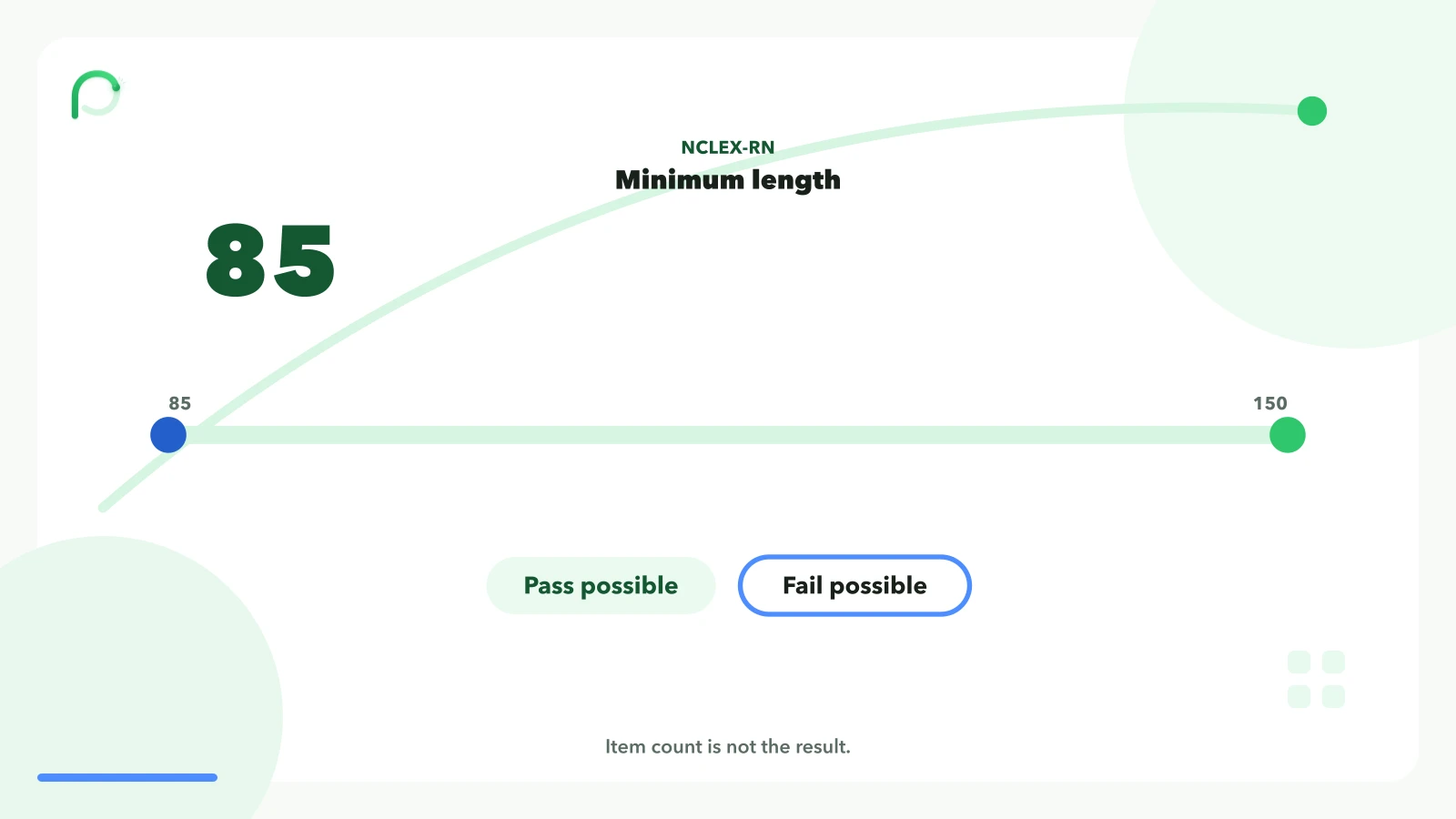
Why 85 questions cannot predict your result
The NCLEX-RN is a variable-length computerized adaptive test. The current exam can contain 85 to 150 items, and every candidate must receive at least the minimum number.
After each scored response, the testing system updates its estimate of your nursing ability and selects another item that helps refine that estimate. Once you reach the minimum, the exam can stop only when one of the official computerized adaptive testing rules is satisfied—not because 85 itself carries a meaning.
The current NCLEX-RN passing standard is measured in logits, not a fixed percentage correct. The item count cannot be converted into a raw passing score.
That is why two candidates can both stop at 85 and receive different results. The item count tells you when the exam ended—not which side of the standard your final estimate reached.
Why the exam can end at the minimum
An 85-question stop usually means the 95% confidence interval rule applied: after the minimum number of items, the system became sufficiently certain that your ability was clearly above or clearly below the passing standard. Either outcome is possible.
Question 85 is not a pass or fail signal on its own. If your exam continued instead, the estimate was still too close to the standard for an early decision. Read what 150 NCLEX questions mean for the maximum-length side of the range.
Can the last question tell you?
No reliable conclusion can be drawn from whether the final item felt easy or hard, whether it was a case study, or whether you answered it correctly. Difficulty is personal, and an adaptive exam chooses items from a range around its current ability estimate.
Trying to reconstruct the test usually adds stress without producing trustworthy information. Your official result—not the question count or your memory of one item—is what matters.
When and how to check your result
NCSBN states that official results come from your nursing regulatory body and are sent within six weeks, with timing varying by body.
If your nursing regulatory body participates in the Quick Results Service and you are seeking U.S. licensure, unofficial results may be available after two business days for a fee. Quick Results do not authorize you to practice and are not a replacement for the official result. Read how NCLEX Quick Results work before checking availability.
An exam that stops at 85 can feel abrupt. The most accurate interpretation is also the simplest: your item count alone is not your result.
Use this order before you change your plan:
- Check authorized channels first. Follow your nursing regulatory body's instructions and your candidate account rather than registration tricks or item-count guesses.
- Pause before you rebuild a study schedule. A short break is reasonable; a full retake plan is not—yet.
- Note broad topics that felt unfamiliar, but treat them as reflection—not proof. They may help later if the official result says another attempt is needed.
- Hold licensure and employment decisions until the nursing regulatory body's official result arrives.
If you are tempted to interpret account behavior or community timelines, read why the Pearson VUE Trick is not reliable before acting on anything unofficial. If a short, familiar review helps you wait, or the official result means another attempt, work through NCLEX-RN practice questions at your own pace in the Passy NCLEX-RN prep app.
Trust the source
Official sources
Exam policies can change. Use these primary sources for the most current details.